


Tuna Business Headlines


IN BRIEF
The Pacific Islands Forum Fisheries Agency (FFA) recently concluded its annual regional fisheries surveillance, ‘Operation Kurukuru,’ held in the tuna-rich WCPO to crack down on IUU fishing. The two-week operation, held from October 5 to 16, recorded over 27,000 satellite detections, which refers to identifying of potential vessels or other maritime targets picked up by satellite-based surveillance systems, 149 vessel sightings, and 82 at-sea and dockside boardings and inspections. Officials identified 13 vessels of interest, leading to one apprehension. It was not disclosed whether any of the vessels were tuna boats.
Maritime surveillance and intelligence technologies, such as Hawkeye 360, Starboard, BlackSky, Skylight and Copernicus, were used for the Operation that brought together fisheries, maritime, law enforcement and defence personnel from FFA’s 17 Members. Australia, France, New Zealand and the US provided operational support, according to an FFA statement. Noan David Pakop, FFA Director-General, said the operation demonstrated the importance of Pacific countries working collectively to protect the fisheries resources that support livelihoods, food security and national economies.
Tuna was among four seafood products involved in an alleged EUR 87 million money-laundering and tax-fraud scheme involving a criminal organization uncovered by Italian authorities.
Italy’s Financial Police Unit, part of the Guardia di Finanza, began searches and seizures last week after an investigation uncovered a criminal organization selling tuna, salmon, sea bass and other seafood, mainly to operators in Sweden, Greece and Spain, without paying value-added tax. The companies also obtained loans that were never repaid. The firms sold seafood at lower prices than competitors, undermining fair competition, while proceeds were reinvested in real estate and other commercial activities, reported SeafoodSource. According to investigators, 14 individuals and corporations were involved in the scam.
US President Donald Trump has signed the Illegal Red Snapper and Tuna Enforcement Act into law on October 15 to help authorities identify where certain fish were caught, detect seafood fraud, and prevent illegally caught fish from entering the US market. The law covers three tuna species – yellowfin, bigeye, and Atlantic bluefin.
The law assigns several agencies including NOAA to co-develop standard chemical-analysis methodology and conduct pilot studies to determine the origin of the tuna and red snapper. This includes a portable field-testing kit that one person can carry. Where practicable, it should also be capable of testing prepared seafood, including raw tuna served as sushi or poké.
what do you think
- No (100%)
- Yes (0%)
TOP 10 Most Read
- Tuna Longliners Continue To Flout WCPFC At-Sea Transshipments Rule
- Thai Processors Face Shrinking Canned Tuna Business
- Jealsa’s Business Collaboration Remains Strong With Mercadona
- Preference For Thai Canned Tuna Drops In Asian Markets
- Washington Pushes For “US Caught Seafood Label” Under New Seafood Strategy
- Major Global Highlights October 2026
- Marshall Islands Seeks Lessons From Seychelles’ Tuna Sector
- MSC-Labelled Tuna Sales Grow Across Global Markets
- Thai Union Posts Positive Results Despite Global Headwinds
- Dongwon Industries Launches Modern Large Scale Seiner ‘Danuri’ In Pacific

Processing Updates
Asia In Focus
ONGOING DISCUSSIONS
ATUNA INDEX
SPECIES GUIDE

MORE NEWS


TUNA TV COMMERCIALS (Watch 100+ More)

تغلّب على الجوع واستمتع باستكشاف المدينة | You can’t enjoy the city on an empty stomach

Century Tuna Superbod “Ageless” Commercial.

No elijas el atún al tuntún. Mejor, elige Calvo | Descubre la nueva campaña de Calvo 2024

Hy-Vee Healthy You: Seared Ahi Tuna Poke Bowl
MUST Watch
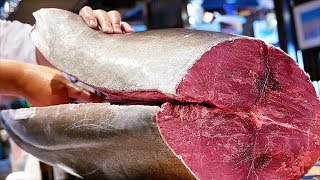
Japanese Food – GIANT BLUEFIN TUNA FISH CUTTING Sashimi Bowl Tokyo Japan

Is China’s fishing fleet taking all of West Africa’s fish? – BBC News

Tsukiji Fish Market Guide: Tuna Auction and Breakfast Odyssey